
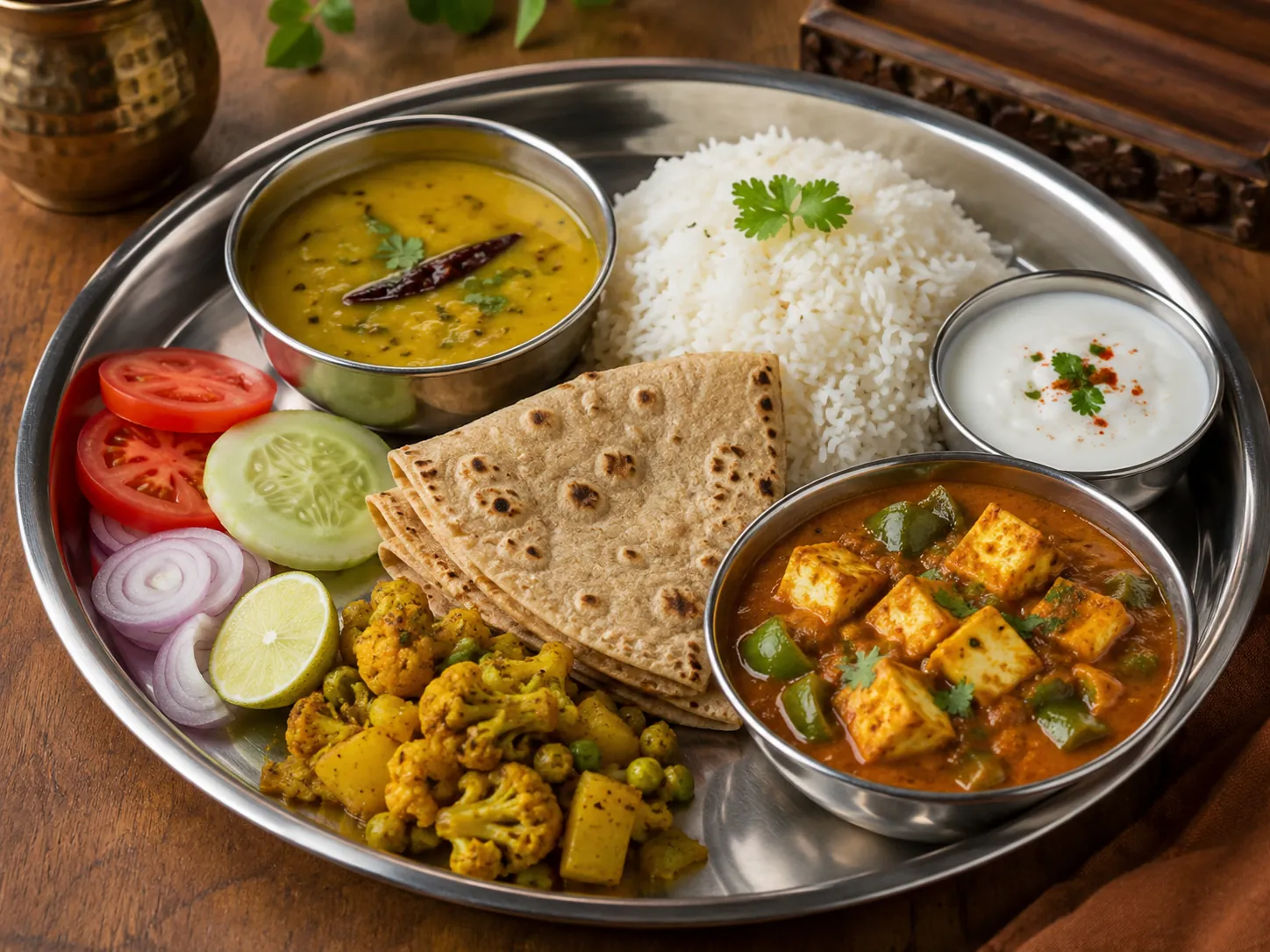
What a traditional thali already gets right
A typical thali already includes a grain, a protein source (dal or a non-veg option), a vegetable, and often a dairy component — the foundational structure of a balanced meal is already there, culturally built in.
Adjusting proportions for weight loss
Slightly reducing rice or roti portions, increasing the vegetable and protein components, and choosing a lighter cooking method for the sabzi shifts an already-balanced thali toward a more calorie-appropriate version without losing the meal's character.
Adjusting proportions for muscle building
Increasing the protein portion specifically (extra dal, an added egg or paneer side) while keeping carbs and fat roughly steady supports muscle-building goals without requiring an entirely different way of eating.
Why this approach beats importing foreign meal templates
Working with an already-familiar, culturally comfortable eating pattern tends to be far more sustainable long-term than switching to quinoa bowls and egg-white omelettes that don't fit existing habits or family meals.